

DiscoverCalabanga
Discover the natural beauty, culture and heritage of Calabanga.
Book Now Pay Later











Loading traveller reviews…
Join Our Newsletter
Get tailored flight deals, travel tips & inspiration straight to your inbox.
HandpickedCalabanga HolidayDeals
Complete holiday packages with flights, hotels and experiences in Calabanga.
Stays AcrossCalabanga
From luxury beachfront resorts to city hotels and budget stays.
UnforgettableExperiencesin Calabanga
Search and book amazing activities and tours across Calabanga.
Top 10 Reasons to Visit Calabanga
Reason 01
A Sneak Peak into Calabanga

- To the traveller who intends to take a holiday to the city of Calabanga, Camarines Sur, the very first thing that would kick the eye is the strategic location of the municipality along the Bicol river and the picturesque San Miguel bay, which gives both adventure and relaxation to a traveller.
- The planning of the town with the combination of rice paddies, fishing villages and a small urban centre indicates the peaceful co-existence of agriculture and sea-based livelihoods, forming the town identity over the centuries.
- The local weather, warm and light breezes off the sea, also offers a pleasant atmosphere, where people can have some relaxing walks along the riverside prominade or the beachfront prominade.
- The community is also evident with families coming together in communal plazas to have meals, music and laughs and this solidifies the image of the town as a friendly and culturally diverse place.
- Stone churches, street names of the colonial times, and the trace of early inhabitants who decided to settle on this fertile territory because it was so fertile, all reflect the historical background of the municipality.
- Tourists will be interested in visiting the town because of its natural beauty and colourful cultural heritage that made it an attractive destination to every traveller seeking a genuine piece of Bicolano culture.
- Capital (of the province): Pili
- International airport: None in Calabanga
- Nearest commonly used airports:
- Ninoy Aquino International Airport (Manila) – primary international gateway
- Bicol International Airport (Daraga, Albay) – main domestic airport serving the Bicol Region (~2–3 hours by land from Calabanga)
- Currency: Philippine Peso (PHP)
- Time zone: UTC+8 (Philippine Standard Time)
- Driving side: Right-hand side
- Main electricity: 220 volts, 60 Hz
- Official / local languages: Rinconada Bikol, Filipino, English
- Major religion: Predominantly Roman Catholic
Reason 02
Highlights

- The major coastal attraction, San Miguel Bay, supports a strong fishing business that provides the local markets and restaurants with a wide range of fresh seafood.
- The Bicol River is the longest river in the region and it flows through the municipality flowing into large rice fields hence the area is known as a huge producer of rice.
- The hectic fish port and market arenas are places of business where traders, fishermen and shoppers meet day in and out, and they form a bustling market that is indicative of the economic activity of the town.
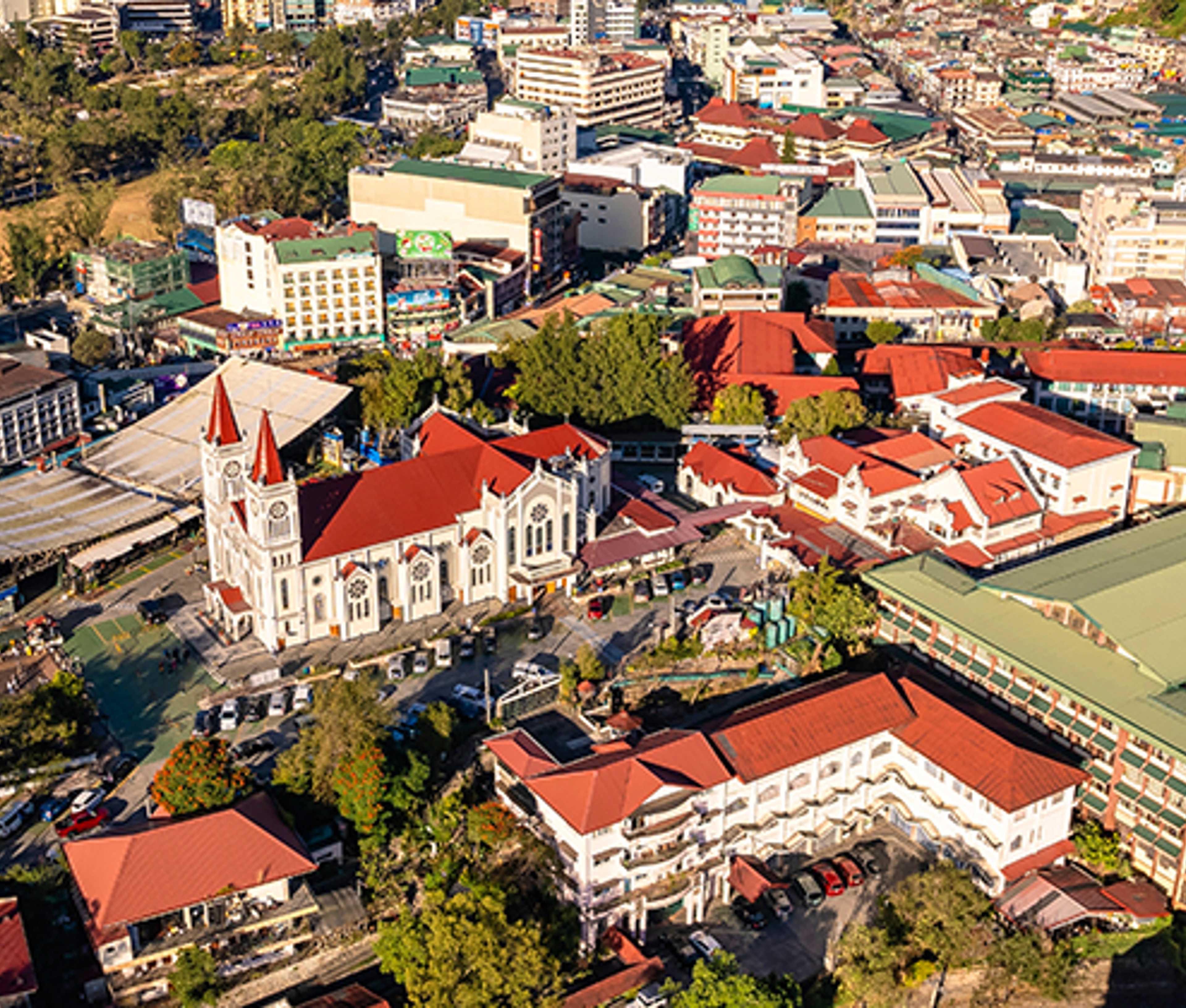
- Our Lady of La Porteria Church, dating back to the Spanish architecture, is a monument of the historical faith and architecture of the town.
- Calabanga has a well-maintained road network that has linked it to other municipalities and it is therefore easily accessible as a day trip to Naga City and other attractions in the region.
- The mangrove forests and estuarine ecosystems on the coast offer crucial environments to marine and biodiversity as well as the local fishing economy.
Reason 03
Seasons to Travel

- November to May forms the dry season and presents the most comfortable climate as the humidity level is low, and the skies are clear, hence the perfect time to go fishing and enjoy the shoreline.
- The wet season is when the greatest amount of rainfall is received in the area, between July and October, and they may sometimes cause little floods, but the waters are also replenished in the river, benefiting the agricultural cycles.
- The tropical climate of the town also implies that the temperature is usually between 25°C and 32°C all the year round, so light clothes and a sun protective lotion are a must-have item that any tourist is bound to have.
- During wet months Typhoon seasons also occur and can cause strong winds and heavy rains, and therefore travellers need to take into consideration weather warnings and mention them on their plan list.
- The celebration of local harvest days, depending on the rice and corn harvest, give a chance to participate in traditional celebrations, particularly throughout the late summer months.
- The scenic beauty of the town is not affected by the seasons, but if people wish to have quieter and more contemplative experiences, the off-peak months of the year are the right moment to visit the river and the bay during their holidays to Calabanga.
Reason 04
Worth A Visit

Fresh Seafood Markets
- The morning markets on the river front are opened by the first ray of sunlight, and show a rainbow of fresh fish that sparkle in the dim rays of dawn.
- Shoppers get to know fishermen, most of whom are local and are warmly greeted with smiling faces to sample their daily catch and visitors are invited to taste the freshest seafood around.
- There are rows of stalls in the market with shells, crabs, and shrimps that are arranged neatly and accompanied by a description of their distinct flavour.
- Tourists have an opportunity to buy entire fishes and get them cooked on-site to be able to eat a freshly cooked piece of food representing the culinary culture of the town.
- The busy environment of the market will offer sufficient chances to communicate with the locals and to get to know the seasonal fishing patterns and collect the genuine souvenir snacks.
- To gastronomes, the selection of spices and seasonings in the market will provide an understanding of the Bicolano taste, which lives based on coconut milk and chilli.

Rice Terraces
- The numerous rice fields that cover the hilly sides of Calabanga look like a green patchwork quilt when looking at them in the sky, particularly in the early morning mist.
- The terraces can be seen either by foot or bicycle, as tourists discover the complex irrigation canals that have fed generations of rice.
- The terraces exhibit a variety of rice growth stages, ranging between growing seedlings to mounds of mature stalks, which provides a live example of agricultural science.
- Tourists are usually invited by local farmers who tell all about traditional ways of planting and harvesting which are environmentally friendly and respectful to the land.
- The terraces have a calm atmosphere in which one can have a reflective moment, with the sound of water flowing through channels rhythmically forming a soothing background to the visitors.
- The terraces are a reflection of the blue hues of the sky on sunny days, creating an amazing view that will be a treasure to the photographers and nature enthusiasts.

The Our Lady of La Porteria Church
- With complicated carvings on the facade of the stone, the church is a proud symbol of the colonial past of the town and its religious faith.
- The polished wood and stained-glass windows of the altar fill the interior with warm, colourful light that calls to silent contemplation.
- The walls are decorated with old religious icons and handwritten parish records, which provides an insight into the spiritual background of the community.
- The plaza around it is an active socialisation area where parishioners and visitors can socialise and pray together and attend local festivals with music and dancing.
- Tours of the church offer the background on its construction, the craftspeople who worked on it, and the contribution that it has made towards the Calabanga cultural identity.
- The feast day that is celebrated every September brings thousands of worshippers that come to partake in processions, worship and feasting.

Proximity to Naga City
- Naga City is only a few minutes away, and is an urban experience that couples with the rural beauty of Calabanga, with its historical landmarks and modern facilities.
- The north and south road linkage enables the tourist to explore the Naga Cathedral, the National Museum of Naga, and even the commercialised commercial area of the town in one day.
- The travellers will have an array of cultural cultural attractions, shopping activities, and food wonders that reflect on the general Bicol region.
- The road itself, which goes through picturesque forest mountain passes, offers breathtaking sceneries of rolling mountains and the sea horizons.
- Educational institutions and medical centres of Naga also make the location a convenient location to spend longer periods or a family purchasing other services.
- The proximity will provide the cultural exchange, as the residents of Calabanga and the tourists will have a chance to see the life of the city clash with the life of the province.
Reason 05
Discover More

Fisheries of San Miguel Bay
- The waters of the bay are brackish, brought to life by inflows of fresh water, which form a special habitat supporting the proliferation of such species as mackerel, sardines, and crab.
- Little fishing-boats, usually painted gayly, move about the surface, and the occupants move their dilapidated nets and bamboo baskets with a skill that is practised.
- Mangrove fringes surrounding the bay are also nursery areas to young fish thereby providing sustainable fish population which is the backbone of the local economy.
- Pelagic species also get imported with seasonal migrations giving the fishermen a chance to land trophy sized fish that are highly sought after in local markets.
- The coastal areas are covered with deposits of the guano, which are utilised by fishermen to serve as natural fertiliser, making the other fish farms along the coast more productive.
- The visitors will have an opportunity to see the ancient methods of fishing which have been passed to the numerous generations like fishing with the help of hand-woven lines and bamboo traps.

Fertile Rice Plains
- During the rainy season the low-lying plains are flooded with a net-work of canals, and the landscape is green and fertile almost to the amount of a painting.
- A blend of manual labour and mechanised tools is used by the local farmers and is a balance between the modern efficiency and the old farming wisdom.
- The high content of nutrients and organic matter of the soil gives it a high yield of rice varieties that are high yielding and supports the population of the town and the surrounding markets.
- Communal feasts, traditional dances and traditional music are also common in the plains where community festivals are held to celebrate the end of the harvest season.
- There are conservation efforts to prevent erosion of the plains as well as to preserve the fine balance between agriculture and the natural ecosystems.
- Sightseeing tours of the farms enable the visitor to see the entire process of growing rice, starting with seedlings up to harvesting and to know about the sustainable farming.

Historical Naming Origin
- The name Calabanga is thought to be after the local term that means a large clay pot that were used by the early settlers to cook and store different food.
- This linguistic relationship is supported by archaeological evidence including clay pots that bore evidence of burning indicating that the town was identified with its agrarian origins.
- The pot or balanga is the symbol of the resilience and community since it was frequently used by the family during communal dinners and celebrations.
- There are local legends of how the first settlers used to sit round the pot to cook rice, which united them, which became the basis of the municipality.
- The continuity of the name through centuries demonstrates the belonging to the community and its attachment to the past and to ordinary things that form the memory of the community.
- Pottery copies can be seen in the museums and cultural centres and visitors can admire the skill and its role in the development of the history of the town.

Local Arts and Crafts
- Calabanga In Calabanga, traditional artisans work with both weaving, basketry and pottery, creating objects that can be used as well as as decoration.
- The process of weaving is considered a craft that uses natural fibres including abaca and pandan and leads to durable, as well as strikingly beautiful textile products.
- Baskets, which served as a fishing tool and storage in households, are characterised by elaborate geometric designs expressing aesthetic sensibility in the area.
- The pottery is crafted out of clay which is found locally and is admired because of the natural earthy colour, as well as the small glaze that makes each item unique.
- Craft markets and workshops provide practical experiences that can teach the visitor some simple tricks and create their own souvenirs.
- These artistic cultures are transmitted orally, and that way, the storeys and values that form the fabric of the culture of the community are preserved.
Reason 06
Culture Traditions

- Central Bicolano is the main language in Calabanga and is a dialect that incorporates melodic consonants with expressive intonation to give conversations a lively tone.
- The religion of Roman Catholicism is embedded in everyday life, and the festivals, the processions, and the prayers of the community are all indicative of a religion that has been able to lead the generations.
- Annual fiesta on September 7th and 8th is a big show with floats, fireworks and street dancing which exhibit the artistic touch of the community.
- Dances that employ the use of the bandurria and bamboo flute, supported by traditional Bicolano music, are used to accompany the dances, which include the “tinikling dance and give the audience a cultural experience.
- Hands on craftsmanship: The artisans of the town make handicrafts with the motifs of fish, rice stalks and designs of pottery, which depict the close connexion between the natural resources in the town and the creative arts.
- The town has been dedicated to its oral histories to make sure that the tales of heroic acts, ancestral knowledge and communal strength have been and still are inspiring to the people who visit it and settle there, making it a culturally rich destination, i.e. the reason why visitors and those alike would want to visit it during holidays to Calabanga, Camarines Sur.
Reason 07
Food Fun Fashion

Food
- Bicolano is known to have bold flavours and uses of coconut milk and chilli as well; it is known to have dishes like: Bicol Express and Laing that are great to the taste buds.
- Freshly caught fish is available in San Miguel Bay, so seafood is a main dish, which is usually cooked using herbs and spices which grow in the area and add to its natural sweetness.
- The food of the town (which is the local harvest) and characterised by luscious sinigang soups and adobo stews is served as a symbol of the food diversity of the region.
- Local favourites are also in the form of -tinalak- which is spicy fish dip cooked with steamed rice and fresh vegetables and this is where the community shows its resourceful approach to fish.
- Street vendors surround the plazas that sell snacks such as kwek-kwek and tuyo that visitors can get to experience local tastes when walking in town.
- To those who want a more refined meal, family restaurants are consecrated to serve meals that include traditional Bicolano cuisine with a touch of modern cuisine, making it a perfect blend between the locals and the tourists, particularly when they are on a vacation to Calabanga, Camarines Sur.

Fun
- The local palengke can be considered an interesting experience as the visitors are able to taste as many different types of fresh food, seafood and other snacks as they want, indulging in the local market atmosphere, which is truly alive during holidays in Calabanga, Camarines Sur.
- The Bicol River is an excellent place to have a peaceful outing with a brief boat ride which gives the passenger the time to pass by the green mangroves and peep at the fishermen at work and the current flowing in the river gives a calming effect.
- The shore barongays offer bare, homely rest areas that the tourists may rest in the sun-kiss beaches, observe the waves breaking on wooden posts, and feel the reassuring beat of the ocean.
- Local festivals Particularly town fiesta are characterised by live music, food stands in the streets and community dances that make all people take part in the celebration of culture and heritage.
- For those who are adventurous, hiking paths that go through rice fields and banks of the rivers will present those waterfalls and panoramic sceneries of the surrounding landscape that brings in satisfying experience of discovery.
- Night walks on the riverside promenade are one of the ways to make the traveller see the sunset colouring the sky with the shades of orange and pink, which is an ideal conclusion of the exploration day.

Fashion
- Casual wear in the form of breathable fabrics like cotton, linen, or bamboo blend is the best choice because of the warm and humid weather that will guarantee comfort even in outdoor activities.
- Rain clothes such as foldable umbrellas and waterproof jackets are handy during the rainy season or when there is a sudden tropical downpour keeping the tourist dry when visiting the town.
- The characteristic Bicolano clothing, which features colourful patterns and hand-woven fabrics are commonly worn on festivals, which is a colourful representation of the locality.
- Proper footwear- loafers, sandals or walking shoes are needed to ensure that the visitors move about the riverbanks, market stalls and old streets comfortably.
- Scarves, wide-brimmed hats, or anything other accessories not only are sun protection, but also give a local touch to the daily wardrobe.
- The changes in the climatic conditions of the town can be accommodated by the seasonal dressing codes such that the visitors will not be out of style and will stay comfortable during their stay.
Reason 08
Nature Safari

- The marine environment of San Miguel Bay is rich and will host numerous species of fish, crustaceans, and mollusks, which will be a great place to snorkel and observe the sea.
- Bicol River has fertile plains which are interspersed with irrigation channels that make it support large plantation of rice, which provide a green and green changing landscape depending on the seasons.
- The coastal mangrove forests are natural shields against storm tides in addition to being the breeding places of fish, crustaceans and migratory birds.
- Wildlife lovers are also able to see different bird species nesting in the mangroves and the riverbanks and these will also provide an added ecological diversity to the region.
- The flora of the area such as coconut palms, banana stalks and rice seedlings demonstrate interdependence of agriculture and nature.
- Holidays to Calabanga Guided eco-tours offer educational benefits to sustainable fishing, conservation of rivers, and the need to maintain mangrove environments to the coming generations.
Reason 09
Events Fiestas

- The town fiesta, held on the 7th and 8th of September, venerates Our Lady of La Porteria, a week of processions, prayers and collective feasts which attract the people of the whole country.
- The fluvial parade is a spectacle of the fiesta, as the decorated boats made of flowers and lights follow the Bicol River and San Miquel Bay representing the maritime tradition of the community.
- Agricultural festivals (when rice and corn are in season), competitions, folk dances, and exhibitions are the activities that demonstrate farming customs in the town.
- The fiestas have local artisans who showcase their skill in the local fiesta and visitors have an opportunity to buy some of the handmade items and understand what techniques have been developed throughout the years.
- Street festivals which include live music, dancing shows and fireworks make it a joyful festival that attracts local as well as tourists to participate in the festival.
- The holidays to Calabanga fiestas act as a cultural abacus, as it brings the residents together and brings pride to the residents and also gives the travellers an insight into the colourful traditions which make Calabanga an identity.